

The feminist rhetorical new materialist framework in Leigh Gruwell's (2022) Making Matters reflected an array of knowledge-making practices that extend across disciplinary boundaries. Similarly, our approach in Conference Creatures arises from new materialist perspectives across feminist thought (Alaimo & Hekman, 2008; Barad, 2007) and rhetorical studies (Clary-Lemon, 2019; Gries & Clary-Lemon, 2022). By examining how our collaborations with physical materials may impact our professional praxes and relationalities through Conference Creatures, we acknowledge our entanglement with an array of actors.
Gruwell's (2022) Making Matters focused on the potential of craft and new materialist rhetorics to account for ethical and hierarchical relationships, and Conference Creatures seeks to use materiality to upset "power relationships," for which Gruwell accounted. Gruwell reviewed texts highlighting affordances of new materialist rhetorics for theorizing feminist rhetorical agency, specifically noting how new materialist attention to both materiality and systemic structures "make them well-suited for the task of addressing and rectifying power inequalities" (p. 29).
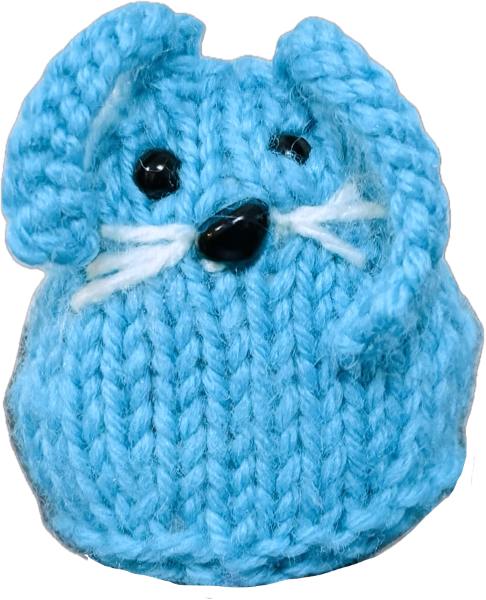
Conference Creatures actively reflects this new materialist goal through the use of materiality to create professional connections that deny the hierarchical nature of our professional field. As Gruwell (2022) suggested of materiality's political ontology, Conference Creatures uses physical materiality to upset power differentials in professional academic settings. By mobilizing Conference Creatures, we collaborate not only with other human actors (e.g., fellow crafters, creature recipients, etc.), but also with our crafting materials, the completed creatures, and the media through which the concept of Conference Creatures travels beyond conference spaces.
While a certain amount of ontological flattening is necessary for new materialisms to offer a liberatory, subversive methodological framework (Gruwell, 2022), we aim not to reject the material realities of hierarchical powers, but to recognize the liberatory possibilities that may emerge if we recognize collaboration between human and nonhuman materialities as an ethic of engagement. Despite rhetorical new materialism's decentering of the individual, its attunement to unseen affects suggests we need to acknowledge the deeply personal nature of Conference Creatures.
Conference Creatures as professional praxis is acutely aware of how the creatures function as tools that, through digital and material engagement with bodies at various locations and times, embody a feminist ethic (Gruwell, 2022, p. 144). Conference Creatures are essentially a tool for redistributing professional social power that's affectively present, even if unintentional.

While we do not characterize Conference Creatures as craftivism because we are not pursuing "an explicitly activist agenda that positions the body itself as a material interface" (Gruwell, 2022, p. 9), we nonetheless find a new materialist lens useful for envisioning Conference Creatures as a radical digital materiality capable of shifting relational praxis in rhetoric and writing studies spaces. Conference Creatures invites teacher-scholars in rhetoric and writing studies to disrupt traditional social hierarchies by providing a kairotic space through which scholars—particularly junior scholars—may begin establishing or maintaining professional connections in conference settings and after. We believe it is through engagement with extra-human relationalities that stronger professional ties, community, and collaboration become feasible for some, particularly those who do not thrive in conference spaces.

In harmony with Gruwell's (2022) analysis of Ravelry as a form of "radical digital materiality," Conference Creatures uses materiality and digital social media presence to reconsider "what counts as political" (p. 10). Conference Creatures' social media presence requires its material referent (the creatures) to create both digital and material professional connections between scholars across all points in their careers and topics of focus in their research. Conference Creatures engages digital materiality to invite connections amongst rhetoric and writing studies conference attendees that are not limited to the in-person space. While the creatures are distributed in conference spaces, their digital materiality facilitates opportunities for networking after a conference concludes.
Building upon Gruwell's (2022) craft agency as it applies to our pedagogies, administrative praxis, and scholarship, we believe this ethics of engagement must extend into our professional lives, specifically in the area of professional networking. While Gruwell details how craft agency is relevant to our lives as scholars, she refers specifically to the research we conduct and scholarship we produce. Further, in Gruwell's attention to academic citation as a possible area for material intervention in our scholarly practices, we're driven to ask: what "counts" in relation to scholarly practices?